


With budget cuts shrinking our police departments and unemployment fueling crime, the smartest answer to protecting our homes is to work together. Just this month, on Sunday February 16, a neighborhood watch group at E. Woodmen Road and Rangewood Drive were able to thwart a 4 a.m. car burglary by two teenagers.
Neighborhood Watch
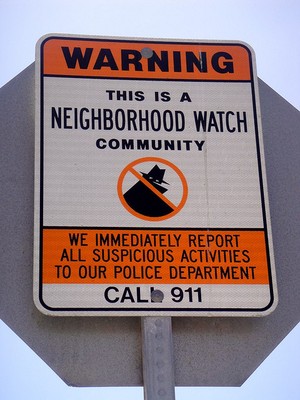 Neighborhood watches began during the colonial era with volunteers patrolling their neighborhoods. In the 1960s in response to a rash of burglaries, neighbors began to organize themselves with the local police department to help keep an eye on each other’s residents and having the police ready to respond.
But it wasn’t until the late 1960s that a true neighborhood watch was established in Queens, New York after the rape and murder of Kitty Genovese. Outraged neighbors decided to set up a neighborhood watch when they learned several witnesses to Ms. Genovese’s murder had done nothing to save her or capture her murderer. By 1972 the National Sheriffs’ Association began to organize a nationwide watch group.
Creating a Safe Community
Neighborhood Watch is effective. Not only does it bring your neighbors together to work as a team reinforcing a communal camaraderie, it also brings citizens together with police enforcement. The two work very well. While law enforcement can’t be everywhere, a Neighborhood Watch can have trained eyes and ears on their neighborhood at all times. And while a citizen cannot and should not attempt to apprehend a criminal, with trained techniques, a citizen can work with law enforcement to capture and prosecute criminals. Most importantly, a Neighborhood Watch can demonstrate their presence in their area at all times, day and night reducing opportunities for crime.
According to the Stapleton United Neighbors website: “In order to get your block active in this program, initial training must be arranged between the residents on your block and the police department. The goal is to attain 70% participation in order to become a certified Neighborhood Watch block. Certified blocks receive two posted Neighborhood Watch signs. These signs advise passersby of your block’s watchfulness and commitment to reducing crime and promoting safety.”
Get on the Watch
According to a U.S. DOJ Crime Prevention Research Review, “The 2000 National Crime Prevention Survey (National Crime Prevention Council, 2001) estimated that 41 percent of the American population lived in communities covered by Neighborhood Watch. The report concluded, “This makes Neighborhood Watch the largest single organized crime-prevention activity in the nation.”
You invested a major portion of your savings and life to owning your home and so has your neighbor. With tight budgets and our government economically strapped, we can’t depend on our officials alone. But we do what this country has always done best during tough times: work together.
To get started, visit USAOnWatch.org.

 Like Us here on Facebook: